We still need €120,000 to finish 2026!
Become an Open Food Facts patron
Every month, we serve 8 million visitors, and many times that through the API. Your support is essential to:
-
keep Open Food Facts open & available to all,
- support infrastructure, the website, mobile app and API with a small permanent team
-
remain independent of the food industry,
-
support the community
-
support science
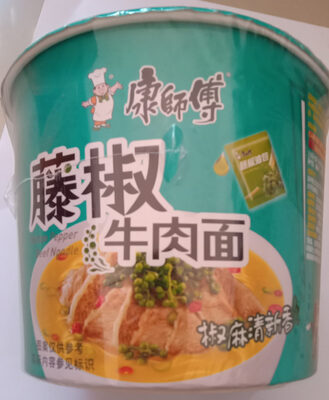
藤椒牛肉面 – 康师傅 – 104g
匹配您的喜好
健康
营养
-
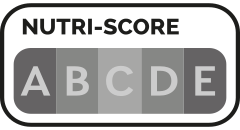
Nutri-Score 未知
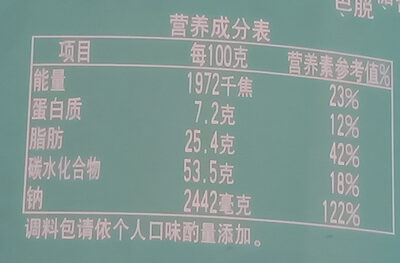
缺少准备好的营养成分表
⚠ ️必须指定产品的营养成分表才能计算 Nutri-Score。缺少制备产品的营养成分表: 能量, 脂肪, 蛋白质, 饱和脂肪, 钠, 糖
您能否添加计算 Nutri-Score 所需的信息?-
发现新的 Nutri-Score !
Nutri-Score 的计算方法正在不断发展,以便根据最新的科学证据提供更好的建议。
主要改进:
- 一些富含脂肪的鱼和油的得分更高
- 富含纤维的整体产品得分更高
- 含有大量盐或糖的产品得分更低
- 红肉得分更低(与家禽相比)
-
Nutri-Score 是什么?
Nutri-Score 是产品整体营养质量的标志。
营养分级由 A 到 E 五个等级组成,计算标准基于有益营养物和食物(例如蛋白质、膳食纤维、水果、蔬菜、豆类),以及要限制的营养物(例如卡路里、饱和脂肪、糖分、盐分)。 该分数是根据营养成分表的数据和成分数据(水果、蔬菜和豆类)计算得出的。
-
成分
-
68 种成分
面饼: 小麦粉、精炼棕榈油、淀粉、醋酸酯淀粉、食用盐、谷朊粉、复配酸度调节剂(碳酸钾、碳酸钠、六偏磷酸钠、磷酸二氢钠、三聚磷酸钠、焦磷酸钠、谷氨酸钠、5-呈味核苷酸二钠)、复配增稠剂(大豆分离蛋白、黄原胶、海藻酸钠、食用玉米淀粉、魔芋粉、全蛋粉)、羧甲基纤维素钠、复配着色剂(栀子黄、核黄素)、维生素E 酱包:精炼棕榈油、盐水渍辣椒、食用牛油、姜、食用盐、牛肉平均0.5克、葱、牛肉复合调味酱、白砂糖、酿造酱油、香辛料、食品用香精、维生素E 粉菜包:食用盐、白砂糖、味精、脱水辣椒、香辛料、脱水青菜、麦芽糊精、酵母抽提物、食品用香精、脱水香菜、脱 水肉块平均0.4克(熟肉制品)、鸡肉复合调味粉、脱水葱、5'-呈味核苷酸二钠、焦糖色、鲜味复合调味料(麦芽糊精、酵母抽提物、食用盐、白砂糖、食品用香精) 油包平均1.3克:藤椒调味油平均0.8克(植物油、藤椒)、精炼棕榈油、维生素E跟踪: 甲壳亚门, 雞蛋, 魚, 麸质, 乳, 软体动物, 花生, 芝麻, 大豆类制品, en:Seashell-
成分信息
-
面饼: 51.2% (估计)
-
— 小麦粉: 51.2% (估计)
-
精炼棕榈油: 24.4% (估计)
-
淀粉: 12.2% (估计)
-
醋酸酯淀粉: 6.1% (估计)
-
食用盐: 3.0% (估计)
-
谷朊粉: < 2% (估计)
-
复配酸度调节剂: < 2% (估计)
-
— 碳酸钾: < 2% (估计)
-
— E500i: < 2% (估计)
-
— 六偏磷酸钠: < 2% (估计)
-
— E339i: < 2% (估计)
-
— E451i: < 2% (估计)
-
— E450iii: < 2% (估计)
-
— 谷氨酸钠: < 2% (估计)
-
— 5-呈味核苷酸二钠: < 2% (估计)
-
复配增稠剂: < 2% (估计)
-
— 大豆分离蛋白: < 2% (估计)
-
— E415: < 2% (估计)
-
— 海藻酸钠: < 2% (估计)
-
— 食用玉米淀粉: < 2% (估计)
-
— 魔芋粉: < 2% (估计)
-
— 全蛋粉: < 2% (估计)
-
羧甲基纤维素钠: < 2% (估计)
-
复配着色剂: < 2% (估计)
-
— 栀子黄: < 2% (估计)
-
— 核黄素: < 2% (估计)
-
维生素e-酱包: < 2% (估计)
-
— 精炼棕榈油: < 2% (估计)
-
盐水渍辣椒: < 2% (估计)
-
食用牛油: < 2% (估计)
-
姜: < 2% (估计)
-
食用盐: < 2% (估计)
-
牛肉平均0-5克: < 2% (估计)
-
葱: < 2% (估计)
-
牛肉复合调味酱: < 2% (估计)
-
白砂糖: < 2% (估计)
-
酿造酱油: < 2% (估计)
-
香辛料: < 2% (估计)
-
食品用香精: < 2% (估计)
-
维生素e-粉菜包: < 2% (估计)
-
— 食用盐: < 2% (估计)
-
白砂糖: < 2% (估计)
-
E621: < 2% (估计)
Monosodium glutamate: Monosodium glutamate -MSG, also known as sodium glutamate- is the sodium salt of glutamic acid, one of the most abundant naturally occurring non-essential amino acids. Glutamic acid is found naturally in tomatoes, grapes, cheese, mushrooms and other foods.MSG is used in the food industry as a flavor enhancer with an umami taste that intensifies the meaty, savory flavor of food, as naturally occurring glutamate does in foods such as stews and meat soups. It was first prepared in 1908 by Japanese biochemist Kikunae Ikeda, who was trying to isolate and duplicate the savory taste of kombu, an edible seaweed used as a base for many Japanese soups. MSG as a flavor enhancer balances, blends, and rounds the perception of other tastes.The U.S. Food and Drug Administration has given MSG its generally recognized as safe -GRAS- designation. A popular belief is that large doses of MSG can cause headaches and other feelings of discomfort, known as "Chinese restaurant syndrome," but double-blind tests fail to find evidence of such a reaction. The European Union classifies it as a food additive permitted in certain foods and subject to quantitative limits. MSG has the HS code 29224220 and the E number E621.来源: Wikipedia (英语)
-
脱水辣椒: < 2% (估计)
-
香辛料: < 2% (估计)
-
脱水青菜: < 2% (估计)
-
麦芽糊精: < 2% (估计)
-
酵母抽提物: < 2% (估计)
-
食品用香精: < 2% (估计)
-
脱水香菜: < 2% (估计)
-
脱-水肉块平均0-4克: < 2% (估计)
-
— 熟肉制品: < 2% (估计)
-
鸡肉复合调味粉: < 2% (估计)
-
脱水葱: < 2% (估计)
-
5-呈味核苷酸二钠: < 2% (估计)
-
焦糖色: < 2% (估计)
-
鲜味复合调味料: < 2% (估计)
-
— 麦芽糊精: < 2% (估计)
-
— 酵母抽提物: < 2% (估计)
-
— 食用盐: < 2% (估计)
-
— 白砂糖: < 2% (估计)
-
— 食品用香精: < 2% (估计)
-
油包平均1-3克:藤椒调味油平均0-8克: < 2% (估计)
-
— 植物油: < 2% (估计)
-
— 藤椒: < 2% (估计)
-
精炼棕榈油: < 2% (估计)
-
维生素E: < 2% (估计)
-
-
食品加工
-
超加工食品
2 个超加工标记
-
限制超加工的食物数量
减少摄入超加工食品可降低非传染性慢性疾病的风险
多项研究发现,减少超加工食品的消费与降低肥胖、高血压和糖尿病等非传染性慢性疾病的风险有关。
来源: Ultra-processed foods increase noncommunicable chronic disease risk
指示产品在 4 - 超加工食品和饮料产品 类中的元素:
- 添加剂: E621 - 味精
- 成分: 麦芽糊精
-
添加剂
-
E339 - 磷酸钠
Sodium phosphates: Sodium phosphate is a generic term for a variety of salts of sodium -Na+- and phosphate -PO43−-. Phosphate also forms families or condensed anions including di-, tri-, tetra-, and polyphosphates. Most of these salts are known in both anhydrous -water-free- and hydrated forms. The hydrates are more common than the anhydrous forms.来源: Wikipedia (英语)
-
E339i - 磷酸二氢钠
Sodium phosphates: Sodium phosphate is a generic term for a variety of salts of sodium -Na+- and phosphate -PO43−-. Phosphate also forms families or condensed anions including di-, tri-, tetra-, and polyphosphates. Most of these salts are known in both anhydrous -water-free- and hydrated forms. The hydrates are more common than the anhydrous forms.来源: Wikipedia (英语)
-
E500
Sodium carbonate: Sodium carbonate, Na2CO3, -also known as washing soda, soda ash and soda crystals, and in the monohydrate form as crystal carbonate- is the water-soluble sodium salt of carbonic acid. It most commonly occurs as a crystalline decahydrate, which readily effloresces to form a white powder, the monohydrate. Pure sodium carbonate is a white, odorless powder that is hygroscopic -absorbs moisture from the air-. It has a strongly alkaline taste, and forms a moderately basic solution in water. Sodium carbonate is well known domestically for its everyday use as a water softener. Historically it was extracted from the ashes of plants growing in sodium-rich soils, such as vegetation from the Middle East, kelp from Scotland and seaweed from Spain. Because the ashes of these sodium-rich plants were noticeably different from ashes of timber -used to create potash-, they became known as "soda ash". It is synthetically produced in large quantities from salt -sodium chloride- and limestone by a method known as the Solvay process. The manufacture of glass is one of the most important uses of sodium carbonate. Sodium carbonate acts as a flux for silica, lowering the melting point of the mixture to something achievable without special materials. This "soda glass" is mildly water-soluble, so some calcium carbonate is added to the melt mixture to make the glass produced insoluble. This type of glass is known as soda lime glass: "soda" for the sodium carbonate and "lime" for the calcium carbonate. Soda lime glass has been the most common form of glass for centuries. Sodium carbonate is also used as a relatively strong base in various settings. For example, it is used as a pH regulator to maintain stable alkaline conditions necessary for the action of the majority of photographic film developing agents. It acts as an alkali because when dissolved in water, it dissociates into the weak acid: carbonic acid and the strong alkali: sodium hydroxide. This gives sodium carbonate in solution the ability to attack metals such as aluminium with the release of hydrogen gas.It is a common additive in swimming pools used to raise the pH which can be lowered by chlorine tablets and other additives which contain acids. In cooking, it is sometimes used in place of sodium hydroxide for lyeing, especially with German pretzels and lye rolls. These dishes are treated with a solution of an alkaline substance to change the pH of the surface of the food and improve browning. In taxidermy, sodium carbonate added to boiling water will remove flesh from the bones of animal carcasses for trophy mounting or educational display. In chemistry, it is often used as an electrolyte. Electrolytes are usually salt-based, and sodium carbonate acts as a very good conductor in the process of electrolysis. In addition, unlike chloride ions, which form chlorine gas, carbonate ions are not corrosive to the anodes. It is also used as a primary standard for acid-base titrations because it is solid and air-stable, making it easy to weigh accurately.来源: Wikipedia (英语)
-
E500i - 碳酸钠
Sodium carbonate: Sodium carbonate, Na2CO3, -also known as washing soda, soda ash and soda crystals, and in the monohydrate form as crystal carbonate- is the water-soluble sodium salt of carbonic acid. It most commonly occurs as a crystalline decahydrate, which readily effloresces to form a white powder, the monohydrate. Pure sodium carbonate is a white, odorless powder that is hygroscopic -absorbs moisture from the air-. It has a strongly alkaline taste, and forms a moderately basic solution in water. Sodium carbonate is well known domestically for its everyday use as a water softener. Historically it was extracted from the ashes of plants growing in sodium-rich soils, such as vegetation from the Middle East, kelp from Scotland and seaweed from Spain. Because the ashes of these sodium-rich plants were noticeably different from ashes of timber -used to create potash-, they became known as "soda ash". It is synthetically produced in large quantities from salt -sodium chloride- and limestone by a method known as the Solvay process. The manufacture of glass is one of the most important uses of sodium carbonate. Sodium carbonate acts as a flux for silica, lowering the melting point of the mixture to something achievable without special materials. This "soda glass" is mildly water-soluble, so some calcium carbonate is added to the melt mixture to make the glass produced insoluble. This type of glass is known as soda lime glass: "soda" for the sodium carbonate and "lime" for the calcium carbonate. Soda lime glass has been the most common form of glass for centuries. Sodium carbonate is also used as a relatively strong base in various settings. For example, it is used as a pH regulator to maintain stable alkaline conditions necessary for the action of the majority of photographic film developing agents. It acts as an alkali because when dissolved in water, it dissociates into the weak acid: carbonic acid and the strong alkali: sodium hydroxide. This gives sodium carbonate in solution the ability to attack metals such as aluminium with the release of hydrogen gas.It is a common additive in swimming pools used to raise the pH which can be lowered by chlorine tablets and other additives which contain acids. In cooking, it is sometimes used in place of sodium hydroxide for lyeing, especially with German pretzels and lye rolls. These dishes are treated with a solution of an alkaline substance to change the pH of the surface of the food and improve browning. In taxidermy, sodium carbonate added to boiling water will remove flesh from the bones of animal carcasses for trophy mounting or educational display. In chemistry, it is often used as an electrolyte. Electrolytes are usually salt-based, and sodium carbonate acts as a very good conductor in the process of electrolysis. In addition, unlike chloride ions, which form chlorine gas, carbonate ions are not corrosive to the anodes. It is also used as a primary standard for acid-base titrations because it is solid and air-stable, making it easy to weigh accurately.来源: Wikipedia (英语)
-
E621 - 味精
Monosodium glutamate: Monosodium glutamate -MSG, also known as sodium glutamate- is the sodium salt of glutamic acid, one of the most abundant naturally occurring non-essential amino acids. Glutamic acid is found naturally in tomatoes, grapes, cheese, mushrooms and other foods.MSG is used in the food industry as a flavor enhancer with an umami taste that intensifies the meaty, savory flavor of food, as naturally occurring glutamate does in foods such as stews and meat soups. It was first prepared in 1908 by Japanese biochemist Kikunae Ikeda, who was trying to isolate and duplicate the savory taste of kombu, an edible seaweed used as a base for many Japanese soups. MSG as a flavor enhancer balances, blends, and rounds the perception of other tastes.The U.S. Food and Drug Administration has given MSG its generally recognized as safe -GRAS- designation. A popular belief is that large doses of MSG can cause headaches and other feelings of discomfort, known as "Chinese restaurant syndrome," but double-blind tests fail to find evidence of such a reaction. The European Union classifies it as a food additive permitted in certain foods and subject to quantitative limits. MSG has the HS code 29224220 and the E number E621.来源: Wikipedia (英语)
成分分析
-
en:May contain palm oil
配料可能含有棕榈油: 植物油
-
未知的素食主义者状态
无法识别的配料: 面饼, 小麦粉, 精炼棕榈油, 醋酸酯淀粉, 食用盐, 谷朊粉, 复配酸度调节剂, 碳酸钾, 六偏磷酸钠, 谷氨酸钠, 5-呈味核苷酸二钠, 复配增稠剂, 大豆分离蛋白, 海藻酸钠, 食用玉米淀粉, 魔芋粉, 全蛋粉, 羧甲基纤维素钠, 复配着色剂, 栀子黄, 维生素e-酱包, 精炼棕榈油, 盐水渍辣椒, 食用牛油, 姜, 食用盐, 牛肉平均0-5克, 牛肉复合调味酱, 白砂糖, 酿造酱油, 香辛料, 食品用香精, 维生素e-粉菜包, 食用盐, 白砂糖, 脱水辣椒, 香辛料, 脱水青菜, 食品用香精, 脱水香菜, 脱-水肉块平均0-4克, 熟肉制品, 鸡肉复合调味粉, 脱水葱, 5-呈味核苷酸二钠, 焦糖色, 鲜味复合调味料, 食用盐, 白砂糖, 食品用香精, 油包平均1-3克:藤椒调味油平均0-8克, 藤椒, 精炼棕榈油, 维生素E有些成分无法识别。
我们需要您的帮助!
您可以通过以下方法帮助我们识别更多的成分,更好地分析本产品及其他产品的成分清单:
- 编辑本产品页面以纠正成分列表中的拼写错误,并/或删除与成分无关的其他语言和句子的成分。
- 添加新的条目,同义词或翻译到我们的多语言的成分列表,成分处理方法和标签。
加入我们的Slack讨论空间 (#ingredients) 和/或了解成分分析在我们的wiki,如果你愿意帮助。谢谢你!
-
素食状态未知
无法识别的配料: 面饼, 小麦粉, 精炼棕榈油, 醋酸酯淀粉, 食用盐, 谷朊粉, 复配酸度调节剂, 碳酸钾, 六偏磷酸钠, 谷氨酸钠, 5-呈味核苷酸二钠, 复配增稠剂, 大豆分离蛋白, 海藻酸钠, 食用玉米淀粉, 魔芋粉, 全蛋粉, 羧甲基纤维素钠, 复配着色剂, 栀子黄, 维生素e-酱包, 精炼棕榈油, 盐水渍辣椒, 食用牛油, 姜, 食用盐, 牛肉平均0-5克, 牛肉复合调味酱, 白砂糖, 酿造酱油, 香辛料, 食品用香精, 维生素e-粉菜包, 食用盐, 白砂糖, 脱水辣椒, 香辛料, 脱水青菜, 食品用香精, 脱水香菜, 脱-水肉块平均0-4克, 熟肉制品, 鸡肉复合调味粉, 脱水葱, 5-呈味核苷酸二钠, 焦糖色, 鲜味复合调味料, 食用盐, 白砂糖, 食品用香精, 油包平均1-3克:藤椒调味油平均0-8克, 藤椒, 精炼棕榈油, 维生素E有些成分无法识别。
我们需要您的帮助!
您可以通过以下方法帮助我们识别更多的成分,更好地分析本产品及其他产品的成分清单:
- 编辑本产品页面以纠正成分列表中的拼写错误,并/或删除与成分无关的其他语言和句子的成分。
- 添加新的条目,同义词或翻译到我们的多语言的成分列表,成分处理方法和标签。
加入我们的Slack讨论空间 (#ingredients) 和/或了解成分分析在我们的wiki,如果你愿意帮助。谢谢你!
-
成分分析的详细信息
我们需要您的帮助!
有些成分无法识别。
我们需要您的帮助!
您可以通过以下方法帮助我们识别更多的成分,更好地分析本产品及其他产品的成分清单:
- 编辑本产品页面以纠正成分列表中的拼写错误,并/或删除与成分无关的其他语言和句子的成分。
- 添加新的条目,同义词或翻译到我们的多语言的成分列表,成分处理方法和标签。
加入我们的Slack讨论空间 (#ingredients) 和/或了解成分分析在我们的wiki,如果你愿意帮助。谢谢你!
zh: 面饼 (小麦粉), 精炼棕榈油, 淀粉, 醋酸酯淀粉, 食用盐, 谷朊粉, 复配酸度调节剂 (碳酸钾, 碳酸钠, 六偏磷酸钠, 磷酸二氢钠, 三聚磷酸钠, 焦磷酸钠, 谷氨酸钠, 5-呈味核苷酸二钠), 复配增稠剂 (大豆分离蛋白, 黄原胶, 海藻酸钠, 食用玉米淀粉, 魔芋粉, 全蛋粉), 羧甲基纤维素钠, 复配着色剂 (栀子黄, 核黄素), 维生素E 酱包 (精炼棕榈油), 盐水渍辣椒, 食用牛油, 姜, 食用盐, 牛肉平均0.5克, 葱, 牛肉复合调味酱, 白砂糖, 酿造酱油, 香辛料, 食品用香精, 维生素E 粉菜包 (食用盐), 白砂糖, 味精, 脱水辣椒, 香辛料, 脱水青菜, 麦芽糊精, 酵母抽提物, 食品用香精, 脱水香菜, 脱 水肉块平均0.4克 (熟肉制品), 鸡肉复合调味粉, 脱水葱, 5'-呈味核苷酸二钠, 焦糖色, 鲜味复合调味料 (麦芽糊精, 酵母抽提物, 食用盐, 白砂糖, 食品用香精), 油包平均1.3克:藤椒调味油平均0.8克 (植物油, 藤椒), 精炼棕榈油, 维生素EIngredient Taxonomy ID vegan vegetarian palm_oil ciqual ciqual_proxy percent min max origin labels 面饼 en:biscuit 24000 51.2 2.4 100.0 小麦粉 zh:小麦粉 51.2 2.4 100.0 精炼棕榈油 zh:精炼棕榈油 24.4 0.0 50.0 淀粉 en:starch yes yes 9510 12.2 0.0 33.3 醋酸酯淀粉 zh:醋酸酯淀粉 6.1 0.0 25.0 食用盐 zh:食用盐 3.0 0.0 20.0 谷朊粉 zh:谷朊粉 1.5 0.0 16.7 复配酸度调节剂 zh:复配酸度调节剂 0.8 0.0 14.3 碳酸钾 zh:碳酸钾 0.4 0.0 14.3 碳酸钠 en:e500i yes yes 0.2 0.0 7.1 六偏磷酸钠 zh:六偏磷酸钠 0.1 0.0 4.8 磷酸二氢钠 en:e339i yes yes 0.0 0.0 3.6 三聚磷酸钠 en:e451i yes yes 0.0 0.0 2.9 焦磷酸钠 en:e450iii yes yes 0.0 0.0 2.4 谷氨酸钠 zh:谷氨酸钠 0.0 0.0 2.0 5-呈味核苷酸二钠 zh:5-呈味核苷酸二钠 0.0 0.0 1.8 复配增稠剂 zh:复配增稠剂 0.4 0.0 12.5 大豆分离蛋白 zh:大豆分离蛋白 0.2 0.0 12.5 黄原胶 en:e415 yes yes 0.1 0.0 6.2 海藻酸钠 zh:海藻酸钠 0.0 0.0 4.2 食用玉米淀粉 zh:食用玉米淀粉 0.0 0.0 3.1 魔芋粉 zh:魔芋粉 0.0 0.0 2.5 全蛋粉 zh:全蛋粉 0.0 0.0 2.1 羧甲基纤维素钠 zh:羧甲基纤维素钠 0.2 0.0 11.1 复配着色剂 zh:复配着色剂 0.1 0.0 10.0 栀子黄 zh:栀子黄 0.0 0.0 10.0 核黄素 en:e101 maybe yes 0.0 0.0 5.0 维生素E 酱包 zh:维生素e-酱包 0.0 0.0 9.1 精炼棕榈油 zh:精炼棕榈油 0.0 0.0 9.1 盐水渍辣椒 zh:盐水渍辣椒 0.0 0.0 8.3 食用牛油 zh:食用牛油 0.0 0.0 7.7 姜 zh:姜 0.0 0.0 7.1 食用盐 zh:食用盐 0.0 0.0 6.7 牛肉平均0.5克 zh:牛肉平均0-5克 0.0 0.0 6.2 葱 en:welsh-onion yes yes 20034 0.0 0.0 5.9 牛肉复合调味酱 zh:牛肉复合调味酱 0.0 0.0 5.6 白砂糖 zh:白砂糖 0.0 0.0 5.3 酿造酱油 zh:酿造酱油 0.0 0.0 5.0 香辛料 zh:香辛料 0.0 0.0 4.8 食品用香精 zh:食品用香精 0.0 0.0 4.5 维生素E 粉菜包 zh:维生素e-粉菜包 0.0 0.0 4.3 食用盐 zh:食用盐 0.0 0.0 4.3 白砂糖 zh:白砂糖 0.0 0.0 4.2 味精 en:e621 yes yes 0.0 0.0 4.0 脱水辣椒 zh:脱水辣椒 0.0 0.0 3.8 香辛料 zh:香辛料 0.0 0.0 3.7 脱水青菜 zh:脱水青菜 0.0 0.0 3.6 麦芽糊精 en:maltodextrin yes yes 0.0 0.0 3.4 酵母抽提物 en:yeast-extract yes yes 11009 0.0 0.0 3.3 食品用香精 zh:食品用香精 0.0 0.0 3.2 脱水香菜 zh:脱水香菜 0.0 0.0 3.1 脱 水肉块平均0.4克 zh:脱-水肉块平均0-4克 0.0 0.0 3.0 熟肉制品 zh:熟肉制品 0.0 0.0 3.0 鸡肉复合调味粉 zh:鸡肉复合调味粉 0.0 0.0 2.9 脱水葱 zh:脱水葱 0.0 0.0 2.9 5'-呈味核苷酸二钠 zh:5-呈味核苷酸二钠 0.0 0.0 2.8 焦糖色 zh:焦糖色 0.0 0.0 2.8 鲜味复合调味料 zh:鲜味复合调味料 0.0 0.0 2.6 麦芽糊精 en:maltodextrin yes yes 0.0 0.0 2.6 酵母抽提物 en:yeast-extract yes yes 11009 0.0 0.0 1.3 食用盐 zh:食用盐 0.0 0.0 0.9 白砂糖 zh:白砂糖 0.0 0.0 0.7 食品用香精 zh:食品用香精 0.0 0.0 0.5 油包平均1.3克:藤椒调味油平均0.8克 zh:油包平均1-3克:藤椒调味油平均0-8克 0.0 0.0 2.6 植物油 en:vegetable-oil yes yes maybe 0.0 0.0 2.6 藤椒 zh:藤椒 0.0 0.0 1.3 精炼棕榈油 zh:精炼棕榈油 0.0 0.0 2.5 维生素E en:vitamin-e 0.0 0.0 2.5
环境影响
-
生态得分 B
低环境影响
⚠ ️交通运输对贵国的全面影响目前尚不清楚。Green-Score 是实验分数,用于总结食品对环境的影响。→ Green-Score 最初适用于法国,随后推广到欧洲其他国家。Green-Score 计算公式会定期更新改进,以提高在各个国家的适应性和精确性。生命周期分析
-
同类产品的平均影响值: A (Score: 82/100)
类别: Asian noodles, flavoured, dehydrated
- PEF 环境评分: 0.26 (分数越低,影响越小)
- 包括对气候变化的影响: 1.66 千克二氧化碳当量/千克产品
阶段 影响 农业
65.2 %加工
20.8 %包装
8.7 %运输
3.5 %分派
1.8 %消耗量
0.0 %
加分与减分
-
成分来源具有高度影响
减分: -5
环保政策: -5
运输: 0
产品和/或其成分的来源 成分列表 影响 中华人民共和国 100 %高
-
无物种威胁成分
-
缺少此产品的包装信息
减分: -15
⚠ ️ 未填写此产品的包装信息。
此产品的 Green-Score
-
对本产品的影响: B (Score: 62/100)
产品: 藤椒牛肉面 – 康师傅 – 104g
生命周期分析得分: 82
加分与减分的总和: -20
最终得分:: 62/100
-
碳足迹
-
相当于驾驶汽油车行驶 0.9 公里
每 100 克产品含 166 克二氧化碳
碳排放数据来自 ADEME Agribalyse 数据库,其类别如下: Asian noodles, flavoured, dehydrated (来源:ADEME Agribalyse 数据库)
阶段 影响 农业
60.9 %加工
14.9 %包装
16.3 %运输
6.9 %分派
1.0 %消耗量
0.0 %
包装
-
缺少此产品的包装信息
⚠ ️ 未填写此产品的包装信息。拍一张回收说明的照片
运输
-
成分来源
成分来源具有高度影响
产品和/或其成分的来源 成分列表 影响 中华人民共和国 100 %高

公布一项问题
-
未完善信息,还是未修改信息?
类别、标签、成分、过敏原、营养信息、照片等。
如果信息与包装上的信息不符,您可以补充或更正。谢谢! Open Food Facts 是一个协作数据库,每一份贡献对所有人都有用。如果您想报告破坏行为、不当内容或您无法自行修复的错误数据,请向我们的管理员团队报告。
数据来源
添加产品 由 songsammy
上次修改产品页面时间 由 songsammy.
产品页面已被修改 openfoodfacts-contributors.