帮助我们向全球数百万消费者推荐食物

group photo donation 2024
open food facts logo

请向我们的 2025 筹款活动捐款

您的捐款将资助我们非营利协会的日常运营:

  • 保持我们的数据库对所有人开放以及良好的稳定性,
    • 技术基础设施(网站/移动应用程序)和一个小型常驻团队
  • 保持独立于食品行业,

  • 参与一个由坚定者组成的社区,

  • 支持公共卫生研究的进步。

每一份捐款都意义非凡!感谢您的支持,让我们共同努力,进一步提升全球食品透明度。

arrow_upward

Soupe poulet – Royco – 4

Soupe poulet – Royco – 4

此产品页面不完整。 您可以通过编辑它并从我们的照片中添加更多数据,或通过使用应用程序拍摄更多照片来帮助完成安卓或者iphone手机感谢 ×

条形码:
5410056186156(EAN / EAN-13)

通用名: Soupe de poulet

数量: 4

包装: en:Cardboard, 23 PBD

品牌: Royco

类别: 菜肴,

标签,认证,奖励: en:Carbon footprint, en:Carbon footprint, en:Carbon footprint, en:Carbon footprint, en:Carbon footprint, en:Carbon footprint, en:Carbon footprint, en:Carbon footprint, en:Carbon footprint, en:Carbon footprint, en:Carbon footprint

商店: Delhaize

可出售的国家: 比利时, 中华人民共和国

匹配您的喜好

健康

营养

  • icon

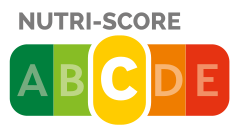
    营养分数 C

    平均营养品质
    ⚠ ️警告:未指定纤维数量,它们对营养等级可能的正向贡献或许不被考虑在内。
    ⚠ ️警告:标签上没有注明水果、蔬菜和坚果的含量,它是根据配料表估计的: 2
    • icon

      发现新的 Nutri-Score !


      Nutri-Score 的计算方法正在不断发展,以便根据最新的科学证据提供更好的建议。

      主要改进:

      • 一些富含脂肪的鱼和油的得分更高
      • 富含纤维的整体产品得分更高
      • 含有大量盐或糖的产品得分更低
      • 红肉得分更低(与家禽相比)
    • icon

      Nutri-Score 是什么?


      Nutri-Score 是产品整体营养质量的标志。

      营养分级由 A 到 E 五个等级组成,计算标准基于有益营养物和食物(例如蛋白质、膳食纤维、水果、蔬菜、豆类),以及要限制的营养物(例如卡路里、饱和脂肪、糖分、盐分)。 该分数是根据营养成分表的数据和成分数据(水果、蔬菜和豆类)计算得出的。

    icon

    负面特征评分: 4/55

    • icon

      能量

      0/10 points (88kJ)

      人体摄入能量大于人体所需,会使体重增长、超重以及肥胖的风险上升,从而增加患与饮食相关的慢性疾病风险。

    • icon

      0/15 points (0.3g)

      大量摄入糖类会导致体重增加和诱发蛀牙。它还会增加患 2 型糖尿病和心血管疾病的风险。

    • icon

      4/20 points (0.97g)

      摄入过多的盐(或钠)会导致血压升高,从而增加患心脏病和中风的风险。

    icon

    正面特征评分: 0/17

    • icon

      蛋白质

      0/7 points (0.5g)

      富含蛋白质的食物通常钙或铁的含量也很高。食物中的钙、铁元素为健康带来诸多益处,是最基础的矿物质。

    • icon

      纤维

      0/5 points (未知)

      食用富含膳食纤维的食物(尤其是全谷物类食品)可以降低患呼吸消化道癌症、心血管疾病、肥胖症和糖尿病的风险。

    • icon

      详细计算营养分数


      ⚠ ️警告:未指定纤维数量,它们对营养等级可能的正向贡献或许不被考虑在内。
      ⚠ ️警告:标签上没有注明水果、蔬菜和坚果的含量,它是根据配料表估计的: 2

      在计算营养分数时,产品是否不被认为是饮料

      由于负分小于 11,因此计算蛋白质的分数。

      营养评分: 4 (4 - 0)

      营养分数: C

份量: 200g

成分

  • icon

    29 种成分


    英语: ingredients of soup after preparation with 200 ml of water: water, pasta 2,1% (wheat flour, salt), vegetables 2,1% (carrot, leek, celery to cut), modified potato starch, glucose syrup, salt, potato starch, flavours (contains barley, wheat, milk and celery), flavour enhancers: e508, e621, e627 and e631, palm fat, ground chicken meat 0,04% , parsley, thickening: xanthan gum, barley malt extract, milk proteins, antioxidants: e310 and e320 , may contain traces of egg and soy
    过敏原: 旱芹, 麸质, 乳
    跟踪: 雞蛋, 乳, 大豆类制品
    • 成分信息


      • ingredients-of-soup-after-preparation-with-200-ml-of-water: 92.5% (估计)


      • — 水: 92.5% (估计)


      • 意式面食: 2.1%


      • — 小麥麵粉: < 2% (估计)


      • — 盐: < 2% (估计)


      • 蔬菜: 2.1%


      • — 胡萝卜: < 2% (估计)


      • — 韭葱: < 2% (估计)


      • — 旱芹: < 2% (估计)


      • Modified potato starch: < 2% (估计)


      • Glucose syrup: < 2% (估计)


      • 盐: < 2% (估计)


      • 太白粉: < 2% (估计)


      • 调味剂: < 2% (估计)


      • 增味劑: < 2% (估计)


      • — 氯化钾: < 2% (估计)


      • E621: < 2% (估计)


        Monosodium glutamate: Monosodium glutamate -MSG, also known as sodium glutamate- is the sodium salt of glutamic acid, one of the most abundant naturally occurring non-essential amino acids. Glutamic acid is found naturally in tomatoes, grapes, cheese, mushrooms and other foods.MSG is used in the food industry as a flavor enhancer with an umami taste that intensifies the meaty, savory flavor of food, as naturally occurring glutamate does in foods such as stews and meat soups. It was first prepared in 1908 by Japanese biochemist Kikunae Ikeda, who was trying to isolate and duplicate the savory taste of kombu, an edible seaweed used as a base for many Japanese soups. MSG as a flavor enhancer balances, blends, and rounds the perception of other tastes.The U.S. Food and Drug Administration has given MSG its generally recognized as safe -GRAS- designation. A popular belief is that large doses of MSG can cause headaches and other feelings of discomfort, known as "Chinese restaurant syndrome," but double-blind tests fail to find evidence of such a reaction. The European Union classifies it as a food additive permitted in certain foods and subject to quantitative limits. MSG has the HS code 29224220 and the E number E621.
        来源: Wikipedia (英语)
      • E627: < 2% (估计)


      • E631: < 2% (估计)


      • Palm fat: < 2% (估计)


      • 鸡肉: 0.0%


      • 香芹: < 2% (估计)


      • thickening: < 2% (估计)


      • — E415: < 2% (估计)


      • 大麥芽精: < 2% (估计)


      • Milk proteins: < 2% (估计)


      • Antioxidant: < 2% (估计)


      • — E310: < 2% (估计)


      • E320: < 2% (估计)


  • icon

    含有添加糖 (~ 1%)

    添加糖: en:Glucose syrup
    成分中添加糖的估计数量: 1%
    搜索同一类别中不添加糖的产品:
    您需要了解的内容
    • 大量摄入糖类会导致体重增加和诱发蛀牙。它还会增加患 2 型糖尿病和心血管疾病的风险。

    推荐: 限制食糖和含糖饮料的消费
    • 应尽可能限制含糖饮料(如含糖的碳酸饮料、果汁饮料、果汁和蜂蜜)的饮用(每天不超过 1 杯)。友情提示:某些甜味剂的安全性仍有待明确,所以这里暂不提及。
    • 选择含糖量较低的产品,减少含糖产品的消费。

食品加工

添加剂

  • E310


    Propyl gallate: Propyl gallate, or propyl 3‚4,5-trihydroxybenzoate is an ester formed by the condensation of gallic acid and propanol. Since 1948, this antioxidant has been added to foods containing oils and fats to prevent oxidation. As a food additive, it is used under the E number E310.
    来源: Wikipedia (英语)
  • E320


    Butylated hydroxyanisole: Butylated hydroxyanisole -BHA- is an antioxidant consisting of a mixture of two isomeric organic compounds, 2-tert-butyl-4-hydroxyanisole and 3-tert-butyl-4-hydroxyanisole. It is prepared from 4-methoxyphenol and isobutylene. It is a waxy solid used as a food additive with the E number E320. The primary use for BHA is as an antioxidant and preservative in food, food packaging, animal feed, cosmetics, rubber, and petroleum products. BHA also is commonly used in medicines, such as isotretinoin, lovastatin, and simvastatin, among others.
    来源: Wikipedia (英语)
  • E415 - 黄原胶


    Xanthan gum: Xanthan gum -- is a polysaccharide with many industrial uses, including as a common food additive. It is an effective thickening agent and stabilizer to prevent ingredients from separating. It can be produced from simple sugars using a fermentation process, and derives its name from the species of bacteria used, Xanthomonas campestris.
    来源: Wikipedia (英语)
  • E508


    Potassium chloride: Potassium chloride -KCl- is a metal halide salt composed of potassium and chlorine. It is odorless and has a white or colorless vitreous crystal appearance. The solid dissolves readily in water and its solutions have a salt-like taste. KCl is used as a fertilizer, in medicine, in scientific applications, and in food processing. In a few states of the United States it is used to cause cardiac arrest as the third drug in the "three drug cocktail" for executions by lethal injection. It occurs naturally as the mineral sylvite, and in combination with sodium chloride as sylvinite.The version for injection is on the World Health Organization's List of Essential Medicines, the most important medications needed in a basic health system.
    来源: Wikipedia (英语)
  • E621 - 味精


    Monosodium glutamate: Monosodium glutamate -MSG, also known as sodium glutamate- is the sodium salt of glutamic acid, one of the most abundant naturally occurring non-essential amino acids. Glutamic acid is found naturally in tomatoes, grapes, cheese, mushrooms and other foods.MSG is used in the food industry as a flavor enhancer with an umami taste that intensifies the meaty, savory flavor of food, as naturally occurring glutamate does in foods such as stews and meat soups. It was first prepared in 1908 by Japanese biochemist Kikunae Ikeda, who was trying to isolate and duplicate the savory taste of kombu, an edible seaweed used as a base for many Japanese soups. MSG as a flavor enhancer balances, blends, and rounds the perception of other tastes.The U.S. Food and Drug Administration has given MSG its generally recognized as safe -GRAS- designation. A popular belief is that large doses of MSG can cause headaches and other feelings of discomfort, known as "Chinese restaurant syndrome," but double-blind tests fail to find evidence of such a reaction. The European Union classifies it as a food additive permitted in certain foods and subject to quantitative limits. MSG has the HS code 29224220 and the E number E621.
    来源: Wikipedia (英语)
  • E627


    Disodium guanylate: Disodium guanylate, also known as sodium 5'-guanylate and disodium 5'-guanylate, is a natural sodium salt of the flavor enhancing nucleotide guanosine monophosphate -GMP-. Disodium guanylate is a food additive with the E number E627. It is commonly used in conjunction with glutamic acid. As it is a fairly expensive additive, it is not used independently of glutamic acid; if disodium guanylate is present in a list of ingredients but MSG does not appear to be, it is likely that glutamic acid is provided as part of another ingredient such as a processed soy protein complex. It is often added to foods in conjunction with disodium inosinate; the combination is known as disodium 5'-ribonucleotides. Disodium guanylate is produced from dried seaweed and is often added to instant noodles, potato chips and other snacks, savory rice, tinned vegetables, cured meats, and packaged soup.
    来源: Wikipedia (英语)
  • E631


    Disodium inosinate: Disodium inosinate -E631- is the disodium salt of inosinic acid with the chemical formula C10H11N4Na2O8P. It is used as a food additive and often found in instant noodles, potato chips, and a variety of other snacks. Although it can be obtained from bacterial fermentation of sugars, it is often commercially prepared from animal sources.
    来源: Wikipedia (英语)

成分分析

  • icon

    非素食


    非素食配料: 鸡肉, en:Milk proteins

    有些成分无法识别。

    我们需要您的帮助!

    您可以通过以下方法帮助我们识别更多的成分,更好地分析本产品及其他产品的成分清单:

    • 编辑本产品页面以纠正成分列表中的拼写错误,并/或删除与成分无关的其他语言和句子的成分。
    • 添加新的条目,同义词或翻译到我们的多语言的成分列表,成分处理方法和标签。

    加入我们的Slack讨论空间 (#ingredients) 和/或了解成分分析在我们的wiki,如果你愿意帮助。谢谢你!

  • icon

    非素食者


    非素食配料: 鸡肉

    有些成分无法识别。

    我们需要您的帮助!

    您可以通过以下方法帮助我们识别更多的成分,更好地分析本产品及其他产品的成分清单:

    • 编辑本产品页面以纠正成分列表中的拼写错误,并/或删除与成分无关的其他语言和句子的成分。
    • 添加新的条目,同义词或翻译到我们的多语言的成分列表,成分处理方法和标签。

    加入我们的Slack讨论空间 (#ingredients) 和/或了解成分分析在我们的wiki,如果你愿意帮助。谢谢你!

该分析仅基于列出的成分,不考虑加工方法
  • icon

    成分分析的详细信息

    我们需要您的帮助!

    有些成分无法识别。

    我们需要您的帮助!

    您可以通过以下方法帮助我们识别更多的成分,更好地分析本产品及其他产品的成分清单:

    • 编辑本产品页面以纠正成分列表中的拼写错误,并/或删除与成分无关的其他语言和句子的成分。
    • 添加新的条目,同义词或翻译到我们的多语言的成分列表,成分处理方法和标签。

    加入我们的Slack讨论空间 (#ingredients) 和/或了解成分分析在我们的wiki,如果你愿意帮助。谢谢你!

    en: ingredients of soup after preparation with 200 ml of water (water), pasta 2.1% (wheat flour, salt), vegetables 2.1% (carrot, leek, celery to), modified potato starch, glucose syrup, salt, potato starch, flavours (), flavour enhancers (e508), e621, e627, e631, palm fat, chicken meat 0.04%, parsley, thickening (xanthan gum), barley malt extract, milk proteins, antioxidants (e310), e320
    1. ingredients of soup after preparation with 200 ml of water -> en:ingredients-of-soup-after-preparation-with-200-ml-of-water – percent_min: 89.65 – percent_max: 95.36
      1. water -> en:water – vegan: yes – vegetarian: yes – ciqual_food_code: 18066 – percent_min: 89.65 – percent_max: 95.36
    2. pasta -> en:pasta – vegan: maybe – vegetarian: maybe – ciqual_proxy_food_code: 9810 – percent_min: 2.1 – percent: 2.1 – percent_max: 2.1
      1. wheat flour -> en:wheat-flour – vegan: yes – vegetarian: yes – ciqual_proxy_food_code: 9410 – percent_min: 1.05 – percent_max: 2.1
      2. salt -> en:salt – vegan: yes – vegetarian: yes – ciqual_food_code: 11058 – percent_min: 0 – percent_max: 0.975
    3. vegetables -> en:vegetable – vegan: yes – vegetarian: yes – percent_min: 2.1 – percent: 2.1 – percent_max: 2.1
      1. carrot -> en:carrot – vegan: yes – vegetarian: yes – ciqual_food_code: 20009 – percent_min: 0.7 – percent_max: 2.1
      2. leek -> en:leek – vegan: yes – vegetarian: yes – ciqual_food_code: 20039 – percent_min: 0 – percent_max: 1.05
      3. celery to -> en:celery – vegan: yes – vegetarian: yes – ciqual_proxy_food_code: 20055 – percent_min: 0 – percent_max: 0.7
    4. modified potato starch -> en:modified-potato-starch – vegan: yes – vegetarian: yes – ciqual_proxy_food_code: 9510 – percent_min: 0.04 – percent_max: 2.1
    5. glucose syrup -> en:glucose-syrup – vegan: yes – vegetarian: yes – ciqual_proxy_food_code: 31016 – percent_min: 0.04 – percent_max: 2.1
    6. salt -> en:salt – vegan: yes – vegetarian: yes – ciqual_food_code: 11058 – percent_min: 0.04 – percent_max: 0.975
    7. potato starch -> en:potato-starch – vegan: yes – vegetarian: yes – ciqual_proxy_food_code: 9510 – percent_min: 0.04 – percent_max: 0.975
    8. flavours -> en:flavouring – vegan: maybe – vegetarian: maybe – percent_min: 0.04 – percent_max: 0
    9. flavour enhancers -> en:flavour-enhancer – percent_min: 0.04 – percent_max: 0
      1. e508 -> en:e508 – vegan: yes – vegetarian: yes – percent_min: 0 – percent_max: 0
    10. e621 -> en:e621 – vegan: yes – vegetarian: yes – percent_min: 0.04 – percent_max: 0
    11. e627 -> en:e627 – vegan: maybe – vegetarian: maybe – percent_min: 0.04 – percent_max: 0
    12. e631 -> en:e631 – vegan: maybe – vegetarian: maybe – percent_min: 0.04 – percent_max: 0
    13. palm fat -> en:palm-fat – vegan: yes – vegetarian: yes – from_palm_oil: yes – ciqual_proxy_food_code: 16129 – percent_min: 0.04 – percent_max: 0
    14. chicken meat -> en:chicken-meat – vegan: no – vegetarian: no – ciqual_food_code: 36005 – percent_min: 0.04 – percent: 0.04 – percent_max: 0
    15. parsley -> en:parsley – vegan: yes – vegetarian: yes – ciqual_proxy_food_code: 11014 – percent_min: 0 – percent_max: 0
    16. thickening -> en:thickening – percent_min: 0 – percent_max: 0
      1. xanthan gum -> en:e415 – vegan: yes – vegetarian: yes – percent_min: 0 – percent_max: 0
    17. barley malt extract -> en:barley-malt-extract – vegan: yes – vegetarian: yes – percent_min: 0 – percent_max: 0
    18. milk proteins -> en:milk-proteins – vegan: no – vegetarian: yes – percent_min: 0 – percent_max: 0
    19. antioxidants -> en:antioxidant – percent_min: 0 – percent_max: 0
      1. e310 -> en:e310 – vegan: yes – vegetarian: yes – percent_min: 0 – percent_max: 0
    20. e320 -> en:e320 – vegan: yes – vegetarian: yes – percent_min: 0 – percent_max: 0

环境影响

包装

运输

受威胁物种

公布一项问题

数据来源

添加产品 openfoodfacts-contributors
上次修改产品页面时间 inf.
产品页面已被修改 countrybot, date-limite-app, els-vercaulen, kiliweb, lifeisgood, michaelvdh, packbot, yuka.YmZraEw1b0FndkFLa2NKazdrclh4SWhYbTZYM1pVQ25EclVqSVE9PQ, yuka.sY2b0xO6T85zoF3NwEKvlkllaMLEmi_bMTHnolzVnY6QdKD5ZspAxIKlMas.

如果数据不完整或者不正确,可以通过编辑此页面来完成或者修改